Evaluating the Dachshund Shadow Box 3D SVG for Precision Paper Crafting
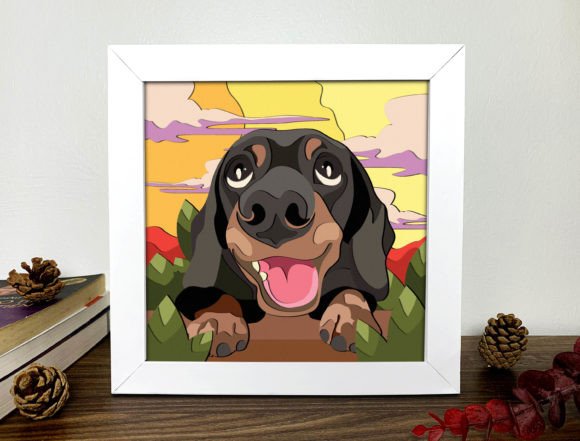
In the evolving landscape of digital crafting assets, the distinction between a standard vector file and a purpose-built layered design often determines the success of a physical project. The Dachshund Shadow Box 3D SVG represents a specific category of digital product designed for depth, dimension, and structural integrity. Unlike flat decals or single-layer stencils, this asset is engineered to create a three-dimensional representation of a dachshund when assembled with cardstock or heavy paper. For professionals and serious hobbyists managing a workflow that includes Cricut machines, Silhouette cutters, or laser engravers, understanding the technical specifications and practical application of such a file is essential before integration into a client project or personal portfolio.
It is critical to establish immediately that this is a digital product. No physical shadow box, paper, or frame will be shipped to the buyer. The value lies entirely in the precision of the vector data and the foresight embedded in the layering structure. The end user is responsible for sourcing materials, selecting color palettes, and executing the assembly. This separation of digital design and physical execution offers significant flexibility, allowing creators to adapt the final output to specific brand colors, interior design schemes, or gift preferences without being constrained by pre-manufactured inventory.
Technical Architecture and File Compatibility
The utility of any digital cutting file rests on its compatibility and the cleanliness of its paths. This particular asset is distributed in four primary formats: SVG, DXF, PDF, and EPS. This multi-format approach ensures broad interoperability across the industry's leading hardware and software ecosystems.
- SVG (Scalable Vector Graphics): Ideally suited for users operating within Cricut Design Space or Silhouette Studio. This format preserves layer information, which is crucial for a 42-layer project, allowing the software to recognize each distinct plane of the shadow box.
- DXF (Drawing Exchange Format): A universal standard often required for older cutting software or specific CAD-based workflows. It ensures that even if a user is not on the latest software update, the geometric data remains intact.
- PDF and EPS: These formats are vital for professional graphic designers who may need to manipulate the vectors in Adobe Illustrator or CorelDRAW before sending them to a cutter. They provide high-fidelity scaling without loss of resolution.
The file has been validated on the Cricut Maker 3, a machine known for handling intricate details and thicker materials. However, the vector nature of the source files means the design is not locked to a single brand of cutter. Whether utilizing a Brother ScanNCut, a Sizzix Eclipse, or a desktop laser cutter, the mathematical paths defining the dachshund's features remain consistent. This reliability is a key strength for freelancers who may switch hardware or collaborate with partners using different equipment.
The Significance of Layer Density and Dimension
What sets this Dachshund Shadow Box 3D SVG apart from simpler designs is its complexity. Comprising 42 distinct layers, the file is engineered to create a gradual, smooth transition of depth rather than a blocky or stepped appearance. In shadow box construction, the number of layers directly correlates to the realism of the final image. Fewer layers can result in a "stair-step" effect that breaks the illusion of continuity, whereas a higher layer count allows for subtle shading and contouring.
With 42 layers, the design captures the nuanced curvature of the dachshund's body, the texture of the fur, and the depth of the facial features. This density requires precision cutting. When working with standard cardstock, typically ranging from 65lb to 110lb cover weight, the cumulative thickness of 42 layers can add several millimeters of depth to the final piece. This necessitates a frame with sufficient internal depth, often referred to as a shadow box frame rather than a standard picture frame.
For the creator, this layer density offers a canvas for advanced color theory application. Rather than using a single shade of brown or black, a crafter can utilize an ombre technique, selecting 42 slightly varying shades of paper to mimic natural lighting and shadow. Alternatively, one might use a monochromatic scheme for a modern, minimalist aesthetic, or high-contrast colors for a pop-art interpretation. The file provides the structure; the user provides the artistic direction.
Material Selection and Assembly Considerations
The recommended material dimensions for this project are 20x20cm (approximately 7.8x7.8 inches). This square footprint is a strategic choice. It fits comfortably within standard 8x8 inch paper pads, which are ubiquitous in the crafting industry, minimizing waste. Furthermore, this size is versatile enough to fit into commonly available 8x8 or 10x10 shadow box frames with matting, or it can be matted down to fit smaller apertures.
When selecting paper, the weight is as important as the color. Lighter papers (below 60lb) may lack the structural rigidity to stand off the backing board effectively, potentially sagging over time. Conversely, extremely heavy chipboard may be difficult to cut with intricate detail on home die-cutting machines, although the Cricut Maker 3 with a Knife Blade could handle it. A high-quality 80lb to 100lb cardstock is generally the sweet spot, offering enough stiffness to maintain the 3D form while remaining easy to weed and layer.
Assembly of a 42-layer design is a meticulous process. It requires patience and a systematic approach. Professionals recommend organizing the cut layers numerically before beginning adhesion. Using foam adhesive squares or liquid glue applied sparingly is critical; excess glue can warp the paper or create visible bumps that disrupt the clean lines of the dachshund silhouette. The time investment for assembly is non-trivial, often taking several hours for a single unit. This factor should be accounted for when pricing the final product for sale or estimating project timelines.
Practical Applications and Target Audience
The versatility of the Dachshund Shadow Box 3D SVG makes it a valuable asset for various professional and semi-professional scenarios.
- Small Business Owners and Etsy Sellers: For entrepreneurs selling handmade goods, this file offers a high-perceived value item. The labor-intensive nature of assembling 42 layers justifies a higher price point compared to flat vinyl decals. It appeals to dog owners looking for personalized, bespoke home decor.
- Interior Designers and Stagers: The ability to customize colors allows designers to create breed-specific art that matches a client's existing color palette perfectly. It serves as a unique accent piece for nurseries, living rooms, or veterinary clinic waiting areas.
- Educators and Workshop Leaders: For those teaching advanced paper crafting techniques, this file serves as an excellent curriculum tool. It demonstrates concepts of layering, depth, color grading, and structural assembly.
- Gift Makers: For individuals creating personalized gifts, the option to choose specific paper colors allows for a deeply personal touch, such as matching the exact coat color of a recipient's pet.
Limitations and Realistic Expectations
While the design is robust, potential buyers must approach the project with realistic expectations regarding the learning curve. A 42-layer assembly is not a quick craft; it is a detailed project. Beginners unfamiliar with weeding small details or aligning layers precisely may find the process challenging. There is also the matter of tolerance. Every cutter has a slight mechanical variance. When stacking nearly 40 layers, minor misalignments can compound, potentially shifting the image slightly off-center. Experienced users mitigate this by cutting a test layer first to verify machine calibration.
Additionally, because this is a digital download, there is no physical support included. Troubleshooting machine settings, paper jams, or adhesive failures falls entirely on the user. The file itself is static; it does not auto-adjust to different frame sizes without manual scaling in the user's software, which must be done proportionally to maintain the integrity of the layer spacing.
Long-Term Value and Workflow Integration
Investing in a high-quality Dachshund Shadow Box 3D SVG offers long-term value through reusability. Once purchased, the file resides in the user's library indefinitely. It can be revisited for holiday gifts, seasonal market stalls, or commission work years down the line. The inclusion of multiple file formats future-proofs the purchase against software obsolescence.
Furthermore, the encouragement for buyers to share their creations fosters a community aspect that can benefit marketers and bloggers. Documenting the build process, sharing time-lapse videos, or showcasing finished products with varied color schemes can generate engagement on social media platforms. This user-generated content not only validates the quality of the design but also provides inspiration for future buyers, creating a cycle of visibility and utility.
In conclusion, this digital asset is a specialized tool for those who appreciate the intersection of digital precision and tactile artistry. It is not merely a picture of a dog; it is a blueprint for a sculptural object. For those equipped with the right materials, patience, and cutting technology, the Dachshund Shadow Box 3D SVG provides a reliable foundation for creating high-end, customized paper art that stands out in a crowded marketplace of flat graphics.