Bringing the Wild to Life: The Creative Power of the Tiger 3D Kids Half Mask
In an era dominated by digital screens and virtual interactions, there is a refreshing and tangible resurgence in hands-on creativity. Parents, educators, and hobbyists are increasingly seeking activities that not only entertain but also foster fine motor skills, spatial reasoning, and imaginative play. At the forefront of this movement is the Tiger 3D Kids Half Mask, a papercraft project that bridges the gap between simple coloring pages and complex engineering models. This isn't just a cut-and-paste activity; it is an accessible entry point into the world of three-dimensional design, offering a unique blend of affordability, educational value, and high-impact visual results.
The appeal of papercrafts lies in their simplicity and accessibility. Unlike 3D printing, which requires expensive hardware and technical knowledge, or clay modeling, which can be messy and time-consuming, paper is a medium everyone understands. The supplies are readily available, the skills required are fundamental, and the cost is negligible compared to the joy and engagement the final product provides. When you engage with a quality template like the one created by Artpaperxyz, you are tapping into a workflow that respects both the creator's time and the user's need for a polished outcome.
The Shift Toward Tangible Creativity in Modern Workflows
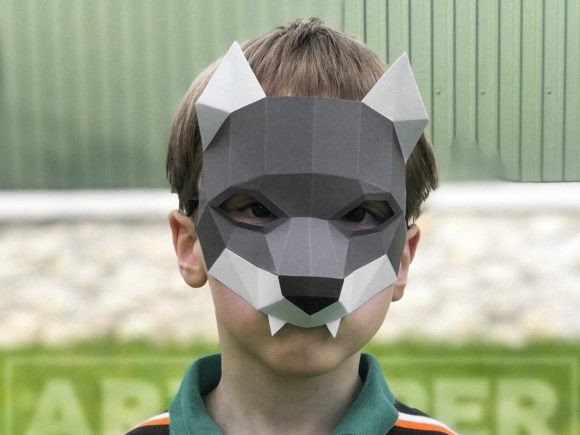
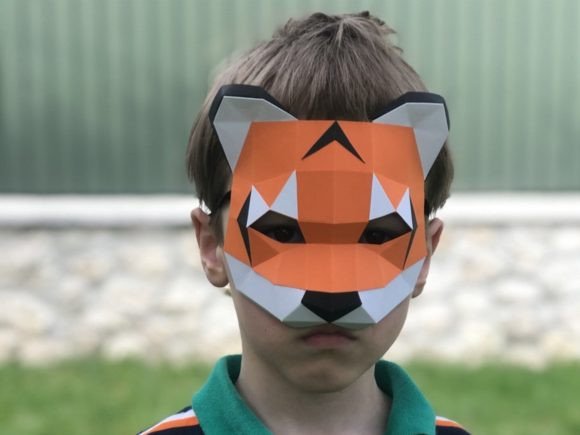
We are witnessing a subtle but significant shift in how people approach leisure and learning. For professionals and entrepreneurs who spend their days navigating abstract digital landscapes, the act of physically constructing an object offers a necessary counterbalance. It grounds the mind. For children, who are often passive consumers of animated content, becoming the creator of their own character—like a fierce tiger—is empowering. The Tiger 3D Kids Half Mask fits perfectly into this changing habit. It transforms a static image into a dynamic prop that can be worn, displayed, or used in storytelling.
This trend reflects a broader market preference for "maker" culture. People want to understand how things are made. They want to see the mechanics behind the magic. A 3D mask reveals these mechanics clearly. As tabs are folded and glued, the flat sheet transforms into a curved surface that mimics the anatomy of a tiger's face. This process teaches basic principles of geometry and structural integrity without feeling like a lesson. It is learning by doing, a pedagogical approach that remains highly effective across all age groups.
Adaptability and Precision in Design
One of the most practical advantages of digital templates is their flexibility. In traditional crafting, if you need a different size, you often have to redraw or photocopy, risking a loss in image quality. With the Tiger 3D Kids Half Mask SVG and PDF files, the possibilities for customization are endless. Whether you are creating a miniature version for a dollhouse diorama or a larger-than-life piece for a stage performance, the digital format allows for precise scaling.
To achieve the best results, it is crucial to maintain the aspect ratio during resizing. You can tweak the size effectively by making sure you resize each page of the SVG file equally. This ensures that the tabs align perfectly with the slots and that the facial features remain proportional. If one dimension is stretched more than the other, the assembly will fail, and the structural integrity of the mask will be compromised. This attention to detail mirrors professional design workflows, where precision is paramount.
The inclusion of both SVG and PDF formats caters to different user needs. PDFs are ideal for immediate printing on standard home printers, ensuring that the layout is preserved exactly as the designer intended. SVG files, on the other hand, offer vector scalability for those who wish to use cutting machines or modify the design further in graphic design software. This dual-format approach demonstrates a deep understanding of user expectations in the modern creator economy.
Material Matters: Choosing the Right Cardstock
The success of any papercraft project hinges largely on the material used. Paper that is too thin will warp under the weight of glue and fail to hold its 3D shape, while paper that is too thick can be difficult to fold cleanly without cracking. For the Tiger 3D Kids Half Mask, the recommended material is Encore Cardstock 80 lb cover (216 gsm). This specific weight strikes the perfect balance between flexibility and rigidity.
At 216 gsm, the cardstock is substantial enough to support the overhanging elements of the tiger's brow and snout without sagging. It holds crisp folds, which are essential for the sharp angles that define the low-poly aesthetic of many 3D masks. Furthermore, this weight of paper accepts glue well, allowing bonds to set quickly and securely. Using the right material elevates the project from a flimsy craft to a durable keepsake.
Finding high-quality materials can sometimes be a hurdle for creators. To simplify this process, resources are available to help you source the exact paper needed. Click here to visit the 12×12 Cardstock Shop to find the recommended Encore Cardstock. This is a paid link at no extra cost to you, ensuring that you can access professional-grade supplies without hunting through multiple vendors. Investing in the correct cardstock ensures that your time spent assembling the mask yields a result that looks professional and lasts.
Educational Implications for Homeschooling and Classrooms
For educators and homeschooling parents, the Tiger 3D Kids Half Mask serves as a versatile tool for interdisciplinary learning. It can be the centerpiece of a unit on wildlife, where students research the habitat and behavior of tigers before building their masks. It can also be used in art classes to discuss form, shadow, and color theory, especially if users choose to paint or decorate the templates before assembly.
The instructions included with the product guide users through the process step-by-step, fostering independence in younger learners. Following sequential instructions is a critical life skill, and papercraft provides a low-stakes environment to practice this. If a step is missed, the consequence is simply a misaligned tab, which can often be corrected. This encourages problem-solving and resilience. Moreover, because the product contains instructions and templates for you to make this mask as many times as you want, it supports iterative learning. A child can make one, learn from the experience, and immediately try again to improve their technique or experiment with different colors.
The Economic and Environmental Case for Papercraft
In a consumer landscape often driven by fast fashion and disposable toys, papercraft offers a sustainable alternative. The environmental footprint of a paper mask is significantly lower than that of a plastic counterpart. Paper is biodegradable and often recyclable. Furthermore, the economic barrier to entry is incredibly low. You do not need to invest in hundreds of dollars of equipment. The primary costs are paper, glue, and the template itself.
This affordability makes high-quality creative experiences accessible to a wider audience. Community centers, libraries, and schools can facilitate workshops using these templates without straining their budgets. For freelancers and content creators, these masks offer a cost-effective way to produce engaging visuals for social media or video content. A well-lit photo of a finished 3D tiger mask can generate significant engagement, driving traffic to blogs or portfolios.
The reusability of the digital files adds another layer of value. Once purchased, the templates are yours forever. You can print them on demand, replacing lost or damaged masks instantly. This eliminates the need for storage space dedicated to bulky craft kits. It aligns with the minimalist lifestyle trends where consumers prefer digital ownership over physical clutter.
Future-Proofing Creative Hobbies
As technology continues to evolve, the intersection of digital files and physical creation will only grow stronger. The Tiger 3D Kids Half Mask represents a microcosm of this future. It starts as a digital asset, downloaded instantly from anywhere in the world, and ends as a physical object held in the hand. This hybrid workflow is becoming the standard for modern makers.
By engaging with these types of projects today, individuals are developing a fluency in digital fabrication concepts that will be relevant tomorrow. Understanding how a 2D net folds into a 3D object is the foundational logic behind CAD software, architectural modeling, and even packaging design. While the end goal here is fun and play, the underlying skills are transferable to professional contexts.
Ultimately, the value of this project lies in the experience it creates. It invites families to sit down together, away from screens, and collaborate on a shared goal. It allows adults to reconnect with the joy of making something with their hands. And for children, it provides a tangible symbol of their creativity—a tiger they brought to life themselves. In a world that often feels uncertain, the ability to create something concrete and beautiful is a powerful reminder of human ingenuity.
Whether you are a parent looking for a rainy-day activity, a teacher planning a thematic lesson, or a designer exploring the potential of paper, the Tiger 3D Kids Half Mask offers a compelling solution. It combines the nostalgia of traditional crafts with the convenience of modern digital distribution. With the right materials, such as the recommended 80 lb cover cardstock, and a willingness to engage with the process, the results can be truly striking. Embrace the opportunity to create, learn, and play in three dimensions.